
Introduction
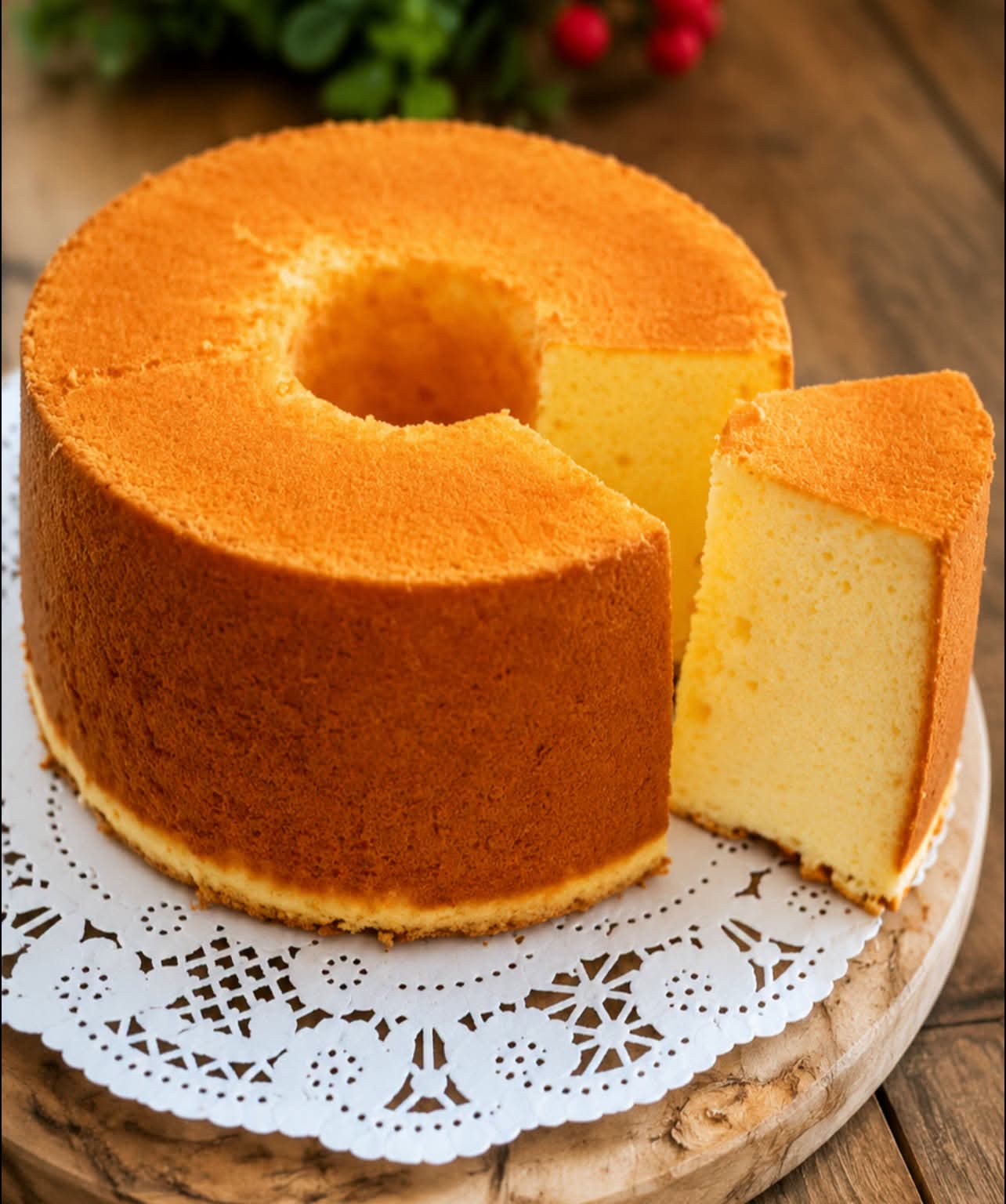
Classic Chiffon Cake is a light, airy, and delicately sweet cake that combines the richness of a butter cake with the fluffy texture of a sponge cake. Made with vegetable oil, whipped egg whites, and simple pantry ingredients, it is known for its exceptionally soft crumb and moist texture. This versatile cake is perfect for birthdays, afternoon tea, family gatherings, or any occasion where a light dessert is desired.
Origin
The chiffon cake was created in the United States in the late 1920s by Harry Baker, a California insurance salesman turned caterer. He kept the recipe a secret for nearly 20 years before selling it to General Mills, which introduced it to the public in 1948. Since then, chiffon cake has become a beloved classic around the world.
Cultural Significance
Classic Chiffon Cake is cherished for its elegant simplicity and versatility. It is commonly served during celebrations, holidays, tea parties, and family dinners. In many Asian countries, chiffon cake is especially popular due to its light texture and subtle sweetness, making it an ideal everyday dessert.
Ingredients
| Ingredient | Quantity |
|---|---|
| Cake flour | 2¼ cups (270 g) |
| Granulated sugar | 1½ cups (300 g), divided |
| Baking powder | 1 tablespoon |
| Salt | 1 teaspoon |
| Large egg yolks | 7 |
| Vegetable oil | ½ cup (120 ml) |
| Water | ¾ cup (180 ml) |
| Vanilla extract | 2 teaspoons |
| Large egg whites | 7 |
| Cream of tartar | ½ teaspoon |
Optional Additions
- Lemon or orange zest for a citrus flavor.
- Almond extract instead of vanilla.
- Fresh berries for serving.
- Whipped cream as a topping.
- Powdered sugar for dusting.
- Chocolate drizzle for a richer dessert.
Tips for Success
- Use room-temperature eggs for maximum volume.
- Whip the egg whites to stiff, glossy peaks.
- Fold the egg whites gently to preserve the airy batter.
- Do not grease the tube pan so the cake can climb the sides while baking.
- Cool the cake upside down before removing it from the pan to prevent collapsing.
Instructions
- Preheat the oven to 325°F (163°C).
- In a large bowl, whisk together the cake flour, 1 cup of sugar, baking powder, and salt.
- Add the egg yolks, vegetable oil, water, and vanilla extract. Mix until smooth.
- In another bowl, beat the egg whites with the cream of tartar until foamy.
- Gradually add the remaining ½ cup sugar while beating until stiff peaks form.
- Gently fold the whipped egg whites into the batter in three additions.
- Pour the batter into an ungreased 10-inch tube pan.
- Bake for 55–65 minutes, or until the top springs back when lightly touched.
- Immediately invert the pan and allow the cake to cool completely.
- Run a thin knife around the edges and center tube to release the cake before serving.
Description
Classic Chiffon Cake features a beautifully golden crust with a cloud-like interior that is soft, moist, and incredibly tender. Its mild vanilla flavor pairs wonderfully with fruit, whipped cream, or enjoyed simply on its own. Every bite is light yet satisfying, making it one of the most beloved sponge-style cakes.
Nutritional Information (Per Serving – 1 of 12 slices)
- Calories: 240
- Carbohydrates: 32 g
- Protein: 5 g
- Fat: 10 g
- Saturated Fat: 1.5 g
- Cholesterol: 110 mg
- Sodium: 180 mg
- Fiber: 0.5 g
- Sugar: 19 g
Conclusion
Classic Chiffon Cake is a timeless dessert celebrated for its feather-light texture, moist crumb, and delicate sweetness. Its elegant simplicity makes it suitable for both everyday enjoyment and special occasions.
Recommendation
Serve with fresh strawberries, blueberries, or peaches, along with lightly sweetened whipped cream. Pair it with tea, coffee, or a refreshing glass of lemonade for a delightful dessert experience.
Embracing Healthful Indulgence
While Classic Chiffon Cake is a sweet treat, its light texture makes it a satisfying dessert without feeling overly heavy. Enjoy it in moderation as part of a balanced lifestyle, and enhance its nutritional value by serving it with fresh fruit for added vitamins, fiber, and natural sweetness.