
Introduction
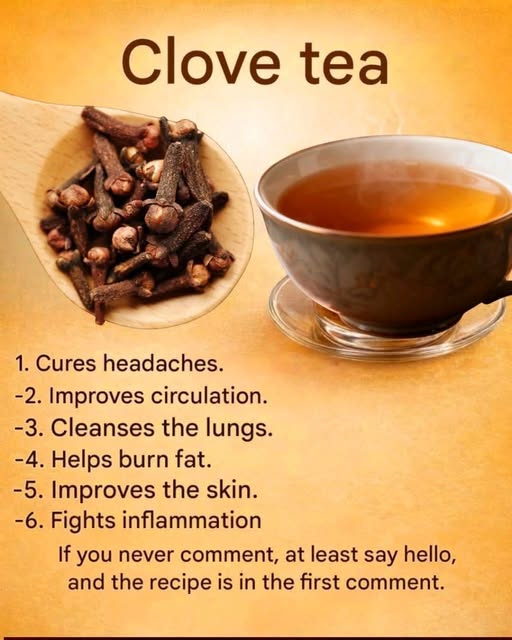
Clove tea is a warm, aromatic herbal drink made by steeping whole cloves in hot water. Cloves contain eugenol, a naturally occurring compound with antioxidant and antimicrobial activity observed in laboratory research. However, evidence is not strong enough to claim that clove tea treats or prevents specific diseases.
For a health-focused meme, it is better to use phrases such as “may support,” “traditionally enjoyed for,” or “contains antioxidant compounds” rather than promising cures.
Origin
Cloves come from the dried flower buds of Syzygium aromaticum, a tree native to the Maluku (Molucca) Islands of Indonesia, historically known as the Spice Islands. Cloves later became an important spice throughout Asia, the Middle East, Africa, and Europe.
Cultural Significance
Cloves have been valued for centuries as both a culinary spice and a traditional herbal ingredient. They are used in foods, warm beverages, traditional remedies, and oral-care preparations. Their distinctive sweet, spicy aroma makes clove tea especially popular as a comforting drink in cooler weather.
Ingredients & Quantity
Makes 1 cup
- 1 cup (240 ml) water
- 3–4 whole cloves
- ½–1 teaspoon honey, optional
- 1 small slice of fresh ginger, optional
- 1 small cinnamon stick, optional
- 1 teaspoon lemon juice, optional
Optional Additions
- Fresh ginger for extra warmth
- Cinnamon for a sweeter, spiced flavor
- Lemon for brightness
- Honey for natural sweetness
- A small amount of black tea if you want a more traditional tea-style drink
Tips for Success
- Use whole cloves rather than clove essential oil.
- Start with 3 cloves; the flavor can become quite strong.
- Steep for about 5–10 minutes and strain before drinking.
- Avoid turning the drink into a highly concentrated “clove water” recipe. There is no established health benefit for concentrated clove water, and the amount of eugenol consumed can be unpredictable.
- Clove oil is highly concentrated and should not be substituted for whole cloves in tea. Large amounts of eugenol can cause serious toxicity.
Instructions
- Bring 1 cup of water to a gentle boil.
- Add 3–4 whole cloves.
- Reduce the heat and gently simmer for 3–5 minutes, or simply cover and steep for 5–10 minutes.
- Strain the cloves.
- Add ginger, cinnamon, lemon, or a little honey if desired.
- Serve warm.
Description
Clove tea has a bold, warming flavor with a naturally sweet and spicy aroma. Its main appeal is as a comforting beverage, while cloves provide small amounts of minerals and plant compounds such as eugenol.
Nutritional Information
Approximate per cup, before optional honey:
- Calories: very low
- Fat: negligible
- Protein: negligible
- Carbohydrates: minimal
- Added sugar: 0 g
The exact nutritional content depends on how many cloves are used and how much of their compounds and nutrients are extracted into the water.
Health Claims — Keep Them Accurate
A meme can say:
“Clove tea contains eugenol, a plant compound with antioxidant and antimicrobial properties.”
Avoid claims such as “cures diabetes,” “detoxes the body,” “melts belly fat,” “kills parasites,” or “prevents cancer.” Current evidence does not establish clove tea as a treatment for these conditions.
Conclusion
Clove tea can be a flavorful way to enjoy cloves as part of a balanced diet. Its traditional reputation is interesting, but the strongest health claims should be treated cautiously because human clinical evidence remains limited.
Recommendation
Enjoy clove tea occasionally as a comforting herbal beverage, rather than as a medicinal treatment. If you take blood-thinning medication, have a bleeding disorder, are pregnant or breastfeeding, or have a medical condition, consult a healthcare professional before regularly consuming concentrated clove preparations.
Embracing Healthful Indulgence
The healthiest message is simple: enjoy traditional foods and beverages for their flavor and comfort while keeping health claims evidence-based. A cup of lightly brewed clove tea can be part of that approach—warm, aromatic, and satisfying without promising miracle results.