
Introduction
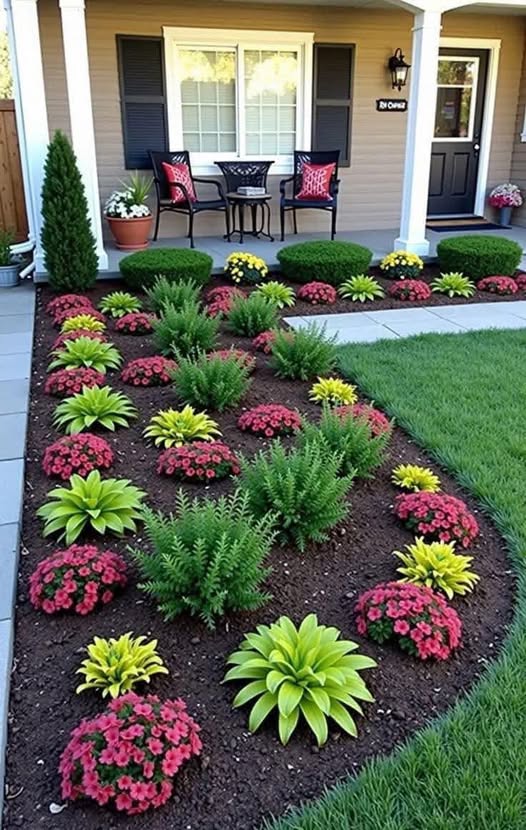
A front yard flower bed can transform an ordinary entrance into a welcoming, colorful outdoor space. The design shown features a layered combination of flowering plants, leafy ornamentals, evergreen shrubs, dark mulch, and a clean lawn edge. Thoughtful landscaping can add color and texture while creating a more polished connection between the home, porch, walkway, and lawn.
Origin
Flower-bed landscaping has roots in formal European gardens, cottage gardens, and traditional residential gardening. Modern front-yard designs combine these influences with practical landscaping principles—grouping plants by height, color, texture, sunlight, and water requirements. Extension guidance recommends planning the bed before planting and selecting plants suited to the site’s conditions.
Cultural Significance
A well-maintained front garden often represents hospitality, pride in the home, and a connection with nature. Flowering gardens can also provide habitat and food for pollinators when a diverse selection of suitable plants is included.
Ingredients / Materials & Quantity
For a medium-sized front-yard bed, approximately:
- 8–12 flowering plants — such as chrysanthemums, marigolds, petunias, or other locally suitable flowers
- 6–10 foliage plants — hostas or similar ornamental foliage plants
- 3–5 evergreen or structural shrubs — for year-round form
- 2–4 ornamental grasses or upright foliage plants
- 1–2 cubic yards of quality garden soil/compost, depending on bed size and existing soil
- 2–3 inches of mulch — bark or wood mulch is a practical choice for perennial beds.
- Garden edging — optional, for a crisp boundary between the bed and lawn
- Watering can or garden hose
- Hand trowel and garden gloves
Quantities should be adjusted according to the actual dimensions and mature size of the plants.
Optional Additions
Consider adding:
- Decorative stones or bricks
- Solar pathway lights
- A small garden ornament
- A birdbath
- Native flowering plants
- Fragrant herbs or flowers
- A small ornamental tree
- Drip irrigation
- A decorative planter near the porch
Native and pollinator-friendly plants can make the garden more ecologically valuable while maintaining its decorative appearance.
Tips for Success
- Study the sunlight first. Observe how much direct sun the bed receives before selecting plants.
- Check drainage and soil. Plant choices should match whether the soil is dry, moist, sandy, or heavy.
- Use layers. Put taller plants toward the back and shorter plants toward the front.
- Plant in groups. Repeating small groups creates a more cohesive appearance than scattering individual plants.
- Choose complementary colors. Two or three coordinating colors can create a cleaner, more sophisticated appearance.
- Don’t overcrowd. Leave enough room for plants to reach their mature width and maintain good air circulation.
- Mulch carefully. Mulch helps conserve moisture and suppress weeds, but keep it away from plant crowns and stems.
- Plan for multiple seasons. Combining plants with different blooming periods can provide a longer display of color.
Instructions
1. Plan the layout
Sketch the front yard and decide where the flower bed, walkway, lawn, and focal plants will go.
2. Prepare the bed
Remove existing grass and weeds. Loosen the soil and incorporate compost or other amendments according to the soil’s needs. Soil testing can help determine appropriate amendments.
3. Arrange the plants
Before digging, place plants in their containers around the bed. Start with larger structural plants and work toward smaller flowers and foliage plants.
4. Create visual repetition
Repeat similar plants or colors throughout the bed instead of creating isolated clusters. This helps the garden feel intentional and balanced.
5. Plant
Dig holes appropriate to each plant’s root ball and follow the plant’s recommended spacing and planting depth.
6. Water thoroughly
Water newly planted plants deeply so the soil around the roots is well moistened. Continue monitoring them closely as they establish.
7. Add mulch
Apply a consistent mulch layer around the plants while leaving the crowns and stems uncovered. Mulch helps conserve moisture and reduce weed pressure.
8. Maintain the garden
Remove weeds, deadhead spent flowers, trim plants when appropriate, and replenish mulch as needed. Regular maintenance keeps the bed attractive throughout the growing season.
Description
This front-yard design creates a cheerful cottage-inspired appearance with rounded flowering plants, bright green foliage, upright greenery, neatly maintained shrubs, and a dark mulch background. The contrast between the colorful plants and green lawn makes the planting bed stand out while keeping the home’s entrance warm and inviting.
Nutritional Information
Not applicable. Landscaping materials and ornamental plants are not a food recipe. If edible herbs, fruits, or vegetables are incorporated into the garden, their nutritional information would depend on the specific plants grown.
Conclusion
A beautiful front flower bed doesn’t require hundreds of plants or complicated structures. Careful planning, suitable plant selection, repeated colors and textures, proper spacing, and consistent maintenance can create an attractive landscape that complements the architecture of the home.
Recommendation
For a design similar to the pictured garden, use a simple color palette—such as pink, yellow, and fresh green—and combine rounded flowering plants with contrasting foliage. Repeat the same plants throughout the bed for visual unity, and use mulch to provide a clean background.
Embracing Healthful Indulgence
Although landscaping isn’t a culinary indulgence, gardening can encourage a healthier relationship with outdoor living. Creating and caring for a flower bed provides an opportunity to spend time outside, appreciate seasonal changes, and cultivate a beautiful space for relaxation. A thoughtfully designed garden can be both a visual pleasure and a rewarding long-term hobby. 🌿🌸🏡