
Introduction
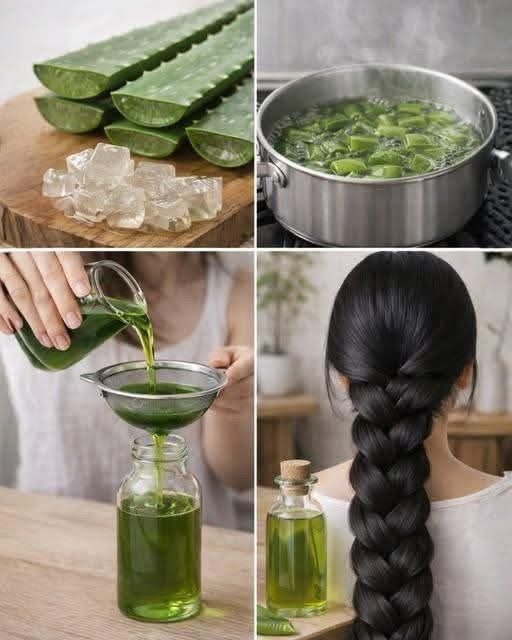
Homemade Aloe Vera Hair Oil is a simple, natural hair-care preparation made by combining aloe vera with a nourishing carrier oil such as coconut, olive, or jojoba oil. It can be used as a scalp and hair-conditioning treatment to help hair feel softer, smoother, and more moisturized. Aloe vera is commonly used topically for its soothing and moisturizing qualities, although scientific evidence that it directly stimulates hair growth is limited.
Origin
Aloe vera has a long history of traditional use in regions with warm, dry climates. Historical records indicate that aloe was used in ancient Greece, Rome, Babylonia, and China for various skin-related purposes.
The modern homemade version combines this traditional plant ingredient with vegetable oils that have long been used in personal hair-care routines.
Cultural Significance
Aloe vera has become an important ingredient in traditional and modern beauty practices around the world. Its fresh gel is particularly valued for its cooling and soothing feel on the skin. Homemade aloe preparations also reflect the broader tradition of using simple plant-based ingredients in everyday personal care.
Ingredients & Quantity
Makes approximately ½ cup (120 ml):
- ¼ cup fresh aloe vera gel
- ¼ cup coconut oil, olive oil, or jojoba oil
- 1 teaspoon vitamin E oil — optional
- 5–10 drops rosemary essential oil — optional
Important: For a longer-lasting oil, it is preferable to use a properly formulated, commercially stabilized aloe ingredient rather than fresh aloe gel because fresh aloe contains water and can make an oil preparation spoil more quickly.
Optional Additions
You can customize the preparation with:
- Jojoba oil: for a lighter-feeling blend
- Olive oil: for richer conditioning
- Argan oil: for softness and shine
- Vitamin E: commonly added to cosmetic oil blends
- A small amount of rosemary essential oil: for fragrance, but dilute properly and discontinue if irritation occurs
Avoid adding many ingredients at once, especially if you have sensitive skin.
Tips for Success
- Use clean, dry equipment and a clean storage container.
- If using fresh aloe, remove the yellow latex/sap and use only the clear inner gel. Aloe products can contain different parts of the plant, and the latex is distinct from the inner gel.
- Perform a small patch test before applying the mixture to your scalp. Aloe can occasionally cause itching, burning, rash, or dermatitis.
- Do not apply it to broken, infected, or severely inflamed skin.
- Start with a small amount so the hair does not become excessively oily.
- If using fresh aloe, make a small batch and refrigerate it rather than storing it for long periods.
- Stop using the product if redness, burning, swelling, or persistent itching develops.
Instructions
- Prepare the aloe: If using fresh aloe, wash the leaf and carefully remove the outer green skin. Collect only the clear inner gel and rinse it thoroughly to remove yellow latex.
- Blend: Blend the aloe gel until smooth.
- Combine: Mix the aloe with your chosen carrier oil.
- Add optional ingredients: Add vitamin E or properly diluted essential oil if desired.
- Store: Transfer to a clean container. Because fresh aloe contains water, homemade mixtures are perishable; refrigerate them and make small quantities rather than keeping them at room temperature.
- Apply: Massage a small amount gently onto the scalp and distribute a little through the hair lengths.
- Leave on: Allow it to sit for about 20–30 minutes.
- Wash: Shampoo thoroughly and condition as usual.
- Frequency: Begin once a week and adjust according to how your scalp and hair respond.
Description
This homemade treatment has a light, botanical character and can leave the hair feeling conditioned and softer. Aloe vera may provide scalp hydration and comfort, while the carrier oil helps reduce the feeling of dryness and adds smoothness.
However, it is important not to present aloe vera as a proven hair-growth treatment. Current evidence is insufficient to show that topical aloe reliably increases hair growth or reverses hair loss.
Nutritional Information
Because this preparation is intended for external use, conventional nutritional information such as calories, protein, carbohydrates, and fat is not applicable.
Do not drink or eat homemade aloe hair oil. Aloe latex and some whole-leaf preparations can cause significant adverse effects when taken orally.
Conclusion
Homemade Aloe Vera Hair Oil can be a pleasant addition to a gentle hair-care routine, particularly for people looking for conditioning and scalp-moisturizing care. Its greatest appeal is its simplicity and the combination of aloe’s soothing properties with a nourishing carrier oil.
The realistic goal should be healthy-feeling, well-conditioned hair, rather than guaranteed hair growth.
Recommendation
Use the treatment conservatively and choose simple ingredients. Patch-test before full application, particularly if you have sensitive skin or a history of reactions to botanical products. If you experience persistent scalp inflammation, sudden shedding, bald patches, or significant hair loss, consult a dermatologist rather than relying on a homemade oil alone.
Embracing Healthful Indulgence
Natural beauty care can be a wonderful form of self-care when approached thoughtfully. Homemade Aloe Vera Hair Oil offers a simple ritual that can make hair-care time feel relaxing and nourishing. Enjoy it as a conditioning and moisturizing treatment, while keeping expectations realistic and prioritizing scalp safety.