
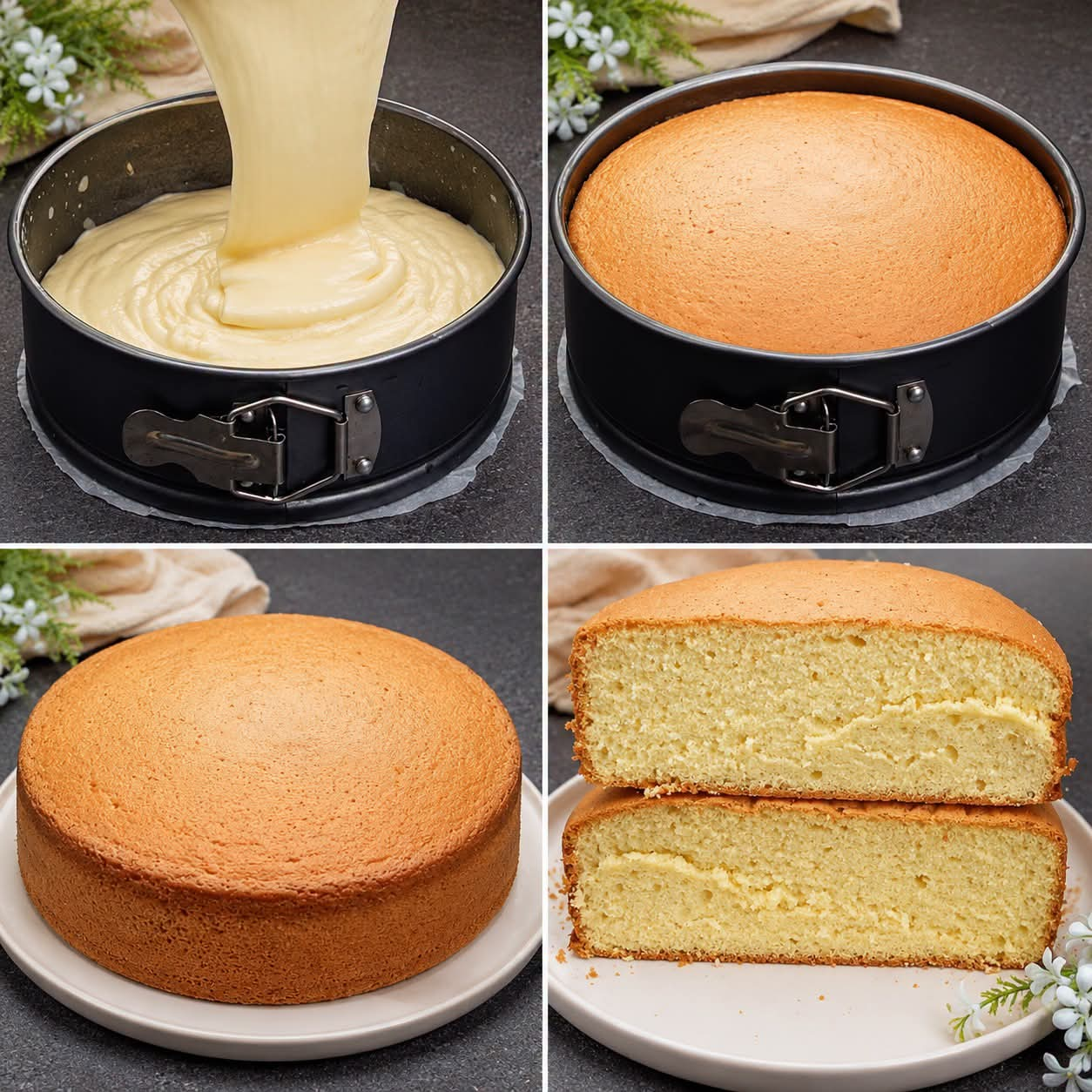
Description A sponge cake is a light, airy baked good made from whipped eggs, sugar, and flour. Its characteristic porous, cloud-like texture comes from trapped air bubbles created during egg whipping, resulting in a soft crumb capable of holding flavor syrups, jams, and creams.
Introduction Sponge cakes serve as the essential foundation of classic pastry making worldwide. Famous for their simple ingredient profile and tender texture, they form the structural base for everything from layered birthday cakes to European gateaux and roll cakes.
Origin and Cultural Significance
- Origins: Traced back to the Renaissance, early sponge cake recipes appeared in English texts like Gervase Markham’s The English Huswife (1615).
- Cultural Expansion: Spanish and Portuguese traders spread sponge-style cakes globally, influencing Asian desserts such as Japanese Castella and Filipino Mamón.
- Global Staples: In Europe, variations like French Génoise, Italian Pan di Spagna, and Victorian Sponge became central to afternoon tea traditions and high pastry arts.
Ingredients Quantity
- Eggs: 4 large (room temperature)
- Granulated Sugar: 3/4 cup (150 g)
- All-Purpose or Cake Flour: 3/4 cup (95 g), sifted
- Unsalted Butter: 2 tbsp (30 g), melted (optional, for a richer crumb)
- Vanilla Extract: 1 tsp
- Baking Powder: 1/2 tsp (optional safety net for rise)
- Salt: 1/4 tsp
Optional Additions
- Citrus Zest: 1 tbsp fresh lemon or orange zest.
- Cocoa Powder: Swap 2 tbsp flour for dark cocoa powder.
- Warm Spices: 1/2 tsp cinnamon or cardamom.
- Soaking Syrups: Simple syrup spiked with rum, coffee, or fruit liqueur.
Tips for Success
- Whip Eggs Thoroughly: Beat eggs and sugar until pale, thick, and reaching the “ribbon stage” (holding shape for 3 seconds when trailed).
- Gentle Folding: Fold flour using a figure-8 motion with a silicone spatula to avoid deflating whipped air.
- Room Temperature Ingredients: Warm eggs whip to a significantly higher volume than cold eggs.
Instructions
- Prep: Preheat oven to 350°F (175°C). Line the bottom of an 8-inch springform pan with parchment paper; leave the sides ungreased so the batter can climb.
- Whip: Beat eggs, sugar, and vanilla together on medium-high speed for 7–10 minutes until thick and pale.
- Fold: Sift flour, baking powder, and salt over the whipped eggs in three increments, gently folding after each.
- Bake: Pour batter into the pan and bake for 22–25 minutes until golden and a toothpick inserted into the center comes out clean.
- Cool: Invert onto a wire cooling rack immediately to maintain maximum rise and volume.
Nutritional Information (Per serving, assuming 8 slices)
- Calories: ~130 kcal
- Protein: 4 g
- Carbohydrates: 20 g
- Fat: 3.5 g
- Saturated Fat: 1.5 g
- Sugar: 12 g
Embracing Healthful Indulgence Sponge cake is naturally lower in fat and calories than butter-heavy pound cakes. You can enhance its nutritional profile by pairing it with fresh berries, light Greek yogurt cream, or switching to unrefined sugar for a lighter dessert option.
Recommendation Enjoy this versatile cake fresh with a dusting of powdered sugar and fresh berries, or cut it into layers to fill with fruit preserves and whipped cream.
Conclusion Mastering the classic sponge cake provides a flexible base for countless desserts. With just a few simple kitchen staples and proper whipping technique, you can produce a bakery-quality cake right at home.