
Introduction
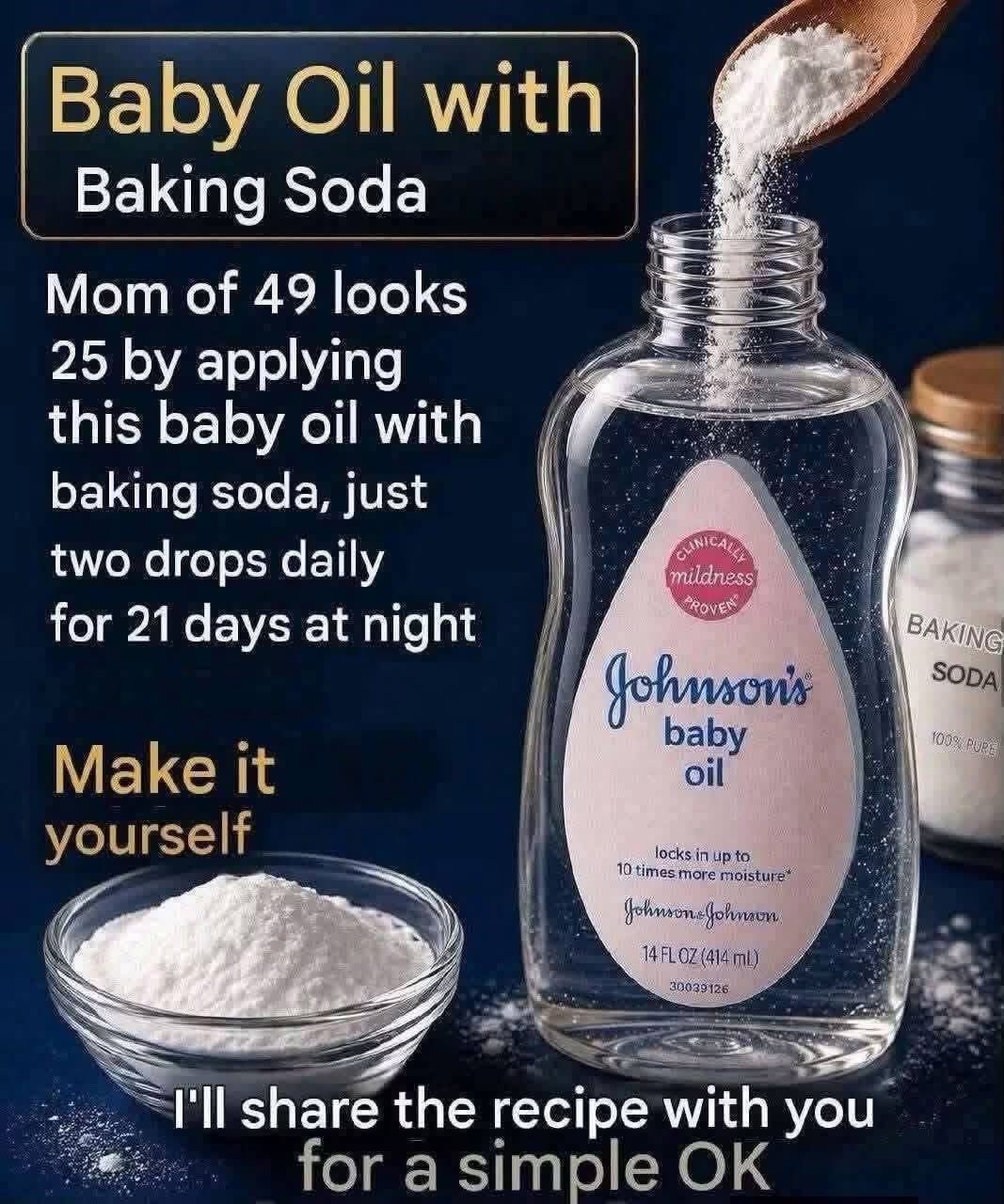
Baby oil and baking soda are sometimes combined in homemade beauty routines as a simple skin-smoothing or cleansing mixture. Baby oil is typically a mineral-oil-based moisturizer that helps reduce moisture loss, while baking soda is an alkaline powder that can act as a gentle physical cleanser. However, baking soda can be irritating or drying for some skin types, so this mixture should be used cautiously and is not necessary for healthy skin.
Origin
Baby oil became widely associated with infant skincare during the 20th century, particularly as a product designed to help moisturize delicate skin. Baking soda, or sodium bicarbonate, has a much longer history as a household ingredient used in cooking, cleaning, and personal-care applications. Their combination comes mainly from modern DIY beauty practices rather than a traditional recipe with a specific cultural origin.
Cultural Significance
DIY skincare has become popular because it emphasizes inexpensive, readily available household ingredients. Baby oil and baking soda are commonly discussed in homemade beauty routines, especially for exfoliation and skin-softening. However, popularity on social media does not necessarily mean that a particular mixture is dermatologically beneficial or suitable for everyone.
Ingredients & Quantities
For a single-use body application:
- 1 teaspoon baby oil
- ½ teaspoon baking soda
Mix only enough for immediate use rather than storing the mixture.
Optional Additions
You can skip the baking soda entirely and use baby oil alone as a moisturizer. If you want a gentler body-care routine, consider:
- A fragrance-free moisturizer
- A gentle, fragrance-free body wash
- A soft washcloth for mild physical exfoliation
Avoid adding lemon juice, vinegar, essential oils, or other concentrated ingredients, particularly if you have sensitive skin.
Tips for Success
- Patch-test first on a small area of skin.
- Do not use the mixture on the face, around the eyes, broken skin, eczema-prone areas, or freshly shaved skin.
- Avoid vigorous rubbing because baking soda can cause irritation.
- Rinse thoroughly after use.
- Stop immediately if you experience burning, redness, itching, or discomfort.
- Baby oil can make the bathtub or shower floor extremely slippery, so clean the surface carefully afterward.
- For regular moisturizing, a fragrance-free moisturizer is generally a more skin-friendly choice.
Instructions
- Place 1 teaspoon of baby oil in a small, clean container.
- Add ½ teaspoon of baking soda.
- Mix until a loose paste forms.
- Apply a very small amount to damp body skin.
- Gently massage for only a few seconds without aggressive scrubbing.
- Rinse thoroughly with lukewarm water.
- Pat the skin dry rather than rubbing.
- Apply a gentle moisturizer afterward if needed.
Description
The mixture creates an oily, slightly gritty preparation. Baby oil leaves the skin feeling smooth by helping reduce moisture loss, while baking soda provides physical exfoliation. Because baking soda is relatively alkaline compared with the skin’s natural surface environment, frequent use may disrupt the skin barrier and cause dryness or irritation.
Nutritional Information
This is a topical skincare preparation and is not intended for consumption, so nutritional information such as calories, protein, carbohydrates, and fat is not applicable.
Conclusion
Baby oil with baking soda is a simple DIY skincare mixture, but simplicity does not necessarily make it suitable for regular use. Baby oil can be useful for moisturizing the body, while baking soda should be approached cautiously because it may irritate the skin.
Recommendation
For everyday skin care, consider using a gentle, fragrance-free moisturizer instead of relying on baking soda exfoliation. If you choose to try the mixture, keep it occasional, use it only on intact body skin, and discontinue it at the first sign of irritation.
Embracing Healthful Indulgence
Healthy self-care is about choosing practices that support the skin barrier rather than simply following popular DIY trends. Enjoy simple skincare rituals, but prioritize gentle ingredients, adequate moisturization, and products that suit your individual skin needs.